

Arizona Mesothelioma Statistics
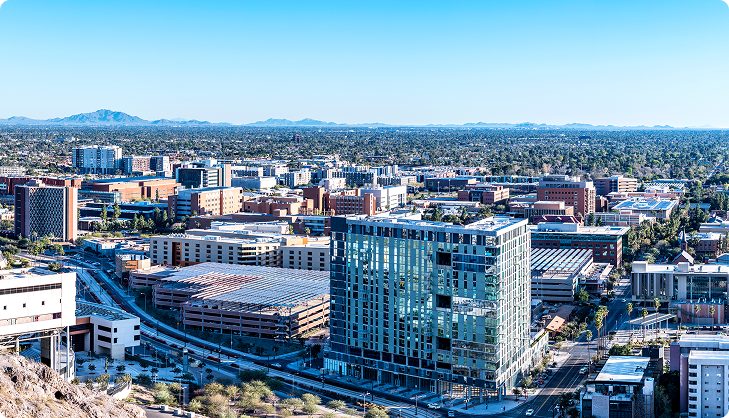
Arizona has a documented history of mesothelioma cases linked to asbestos exposure across mining, industrial work, military service, and construction. According to data from the Centers for Disease Control and Prevention’s WONDER database, the state recorded more than 1,000 mesothelioma deaths between 1999 and 2020, reflecting the long-term impact of occupational and environmental exposure.
Mesothelioma is known for its extended latency period, often developing 20 to 70 years after initial exposure. Because of this delay, individuals exposed to asbestos decades ago in Arizona may still be diagnosed today. Understanding these trends can help patients and families better recognize potential risks, evaluate their options, and seek appropriate support.
Navigate this page
Key Arizona Mesothelioma Statistics at a Glance
Arizona Mesothelioma Incidence Trends Over Time
Arizona’s Asbestos History—Why the State Has Elevated Risk
Who Is Most at Risk for Mesothelioma in Arizona?
Mesothelioma Diagnosis and Prognosis—What Arizona Patients Should Know
Frequently Asked Questions About Arizona Mesothelioma Statistics
- Arizona recorded more than 1,000 mesothelioma deaths and over 1,400 diagnosed cases between 1999 and 2020, according to federal health data.
- Asbestos exposure in Arizona is closely tied to mining, construction, military service, and industrial work across the state.
- Mesothelioma continues to be diagnosed in Arizona due to its long latency period, which can range from 20 years to more than 70 years after exposure.
- The Gori Law Firm has extensive experience handling asbestos-related claims and offers free case evaluations to help individuals understand their legal options.
Key Arizona Mesothelioma Statistics at a Glance
Mesothelioma data for Arizona is drawn from national public health databases, including the CDC WONDER mortality system and the CDC’s United States Cancer Statistics program. These figures provide a baseline for understanding how frequently the disease has occurred in the state and how it compares to national mesothelioma data.
When viewed alongside national data, Arizona’s mesothelioma rate aligns closely with broader trends. Across the United States, the disease is diagnosed far more often in men than in women, and it most commonly develops in the lining of the lungs. These patterns reflect how exposure has historically occurred and help explain who is most affected and how the disease presents.
Arizona Mesothelioma Incidence Trends Over Time
Mesothelioma incidence in the United States has gradually declined since its peak in the early 2000s, a trend that is also reflected in Arizona. National data shows that new diagnoses decreased from approximately 3,247 cases in 2003 to 2,669 in 2022, representing a steady downward shift over time.
Despite this decline, mesothelioma continues to be diagnosed each year. One of the primary reasons is the disease’s unusually long latency period. According to CDC findings, mesothelioma can take anywhere from 20 years to more than 70 years to develop after initial asbestos exposure. This means individuals exposed decades ago may only now be receiving a diagnosis.
This extended latency period is a defining characteristic of mesothelioma and shapes how the disease appears over time.


Arizona’s Asbestos History—Why the State Has Elevated Risk
Arizona’s history of asbestos exposure is closely tied to its industrial development and natural resources. For much of the 20th century, asbestos was widely used across mining, construction, manufacturing, and military operations, creating multiple pathways for long-term exposure.
Unlike many states that relied primarily on imported asbestos, Arizona was also home to active asbestos mining. Combined with widespread industrial use, this created conditions where workers and nearby communities could come into contact with asbestos fibers over extended periods.
These historical conditions have contributed to the ongoing presence of asbestos-related disease in Arizona, particularly among individuals with occupational or environmental exposure.
Asbestos Mining in Arizona
Arizona had active asbestos mining operations, which contributed to long-term exposure risks for workers and nearby communities. Historical records from federal health agencies identify Arizona as a former asbestos-producing state, with mining activity concentrated in areas such as Gila County and the Salt River Canyon region. The primary form extracted was chrysotile asbestos, a mineral widely used in commercial and industrial applications.
In addition to mining itself, certain processing and distribution sites in Arizona have been linked to elevated exposure risks. Federal health investigations have documented asbestos contamination at facilities in Phoenix and Glendale that processed vermiculite ore shipped from Libby, Montana. Workers at these locations, along with some household members, were exposed to asbestos fibers through occupational and secondary contact.
These mining and processing activities created multiple exposure pathways that continue to be relevant when evaluating mesothelioma risk in Arizona.
Industrial and Occupational Asbestos Exposure Sites in Arizona
Beyond mining, asbestos exposure in Arizona was widespread across multiple industries that relied on heat-resistant and fireproof materials throughout much of the 20th century. Occupations in construction, copper smelting, oil refining, and power generation frequently involved direct contact with asbestos-containing materials used in insulation, machinery, and building components.
Several Arizona exposure sites have been formally identified as sites of asbestos contamination and remediation. For example, the Mountain View Mobile Homes area, located on the site of a former asbestos mill, has been designated as a federal Superfund site. Military installations such as the Yuma Marine Corps Air Station have also undergone cleanup efforts involving asbestos-containing materials.
Today, exposure risks are more commonly associated with the renovation or maintenance of older buildings that still contain asbestos materials. This ongoing risk highlights how legacy asbestos use continues to affect workers and residents, even after regulatory changes reduced its widespread use.
Who Is Most at Risk for Mesothelioma in Arizona?
Mesothelioma risk in Arizona is closely tied to patterns of asbestos exposure identified across specific industries, occupations, and populations. While exposure can occur in a variety of settings, research consistently shows that certain groups face a significantly higher risk due to the nature of their work or environment.
Understanding who is most affected can help individuals recognize potential exposure history and better evaluate their risk.
High-Risk Occupations in Arizona
The majority of mesothelioma cases are linked to occupational asbestos exposure. According to CDC findings, approximately 85 percent of cases nationwide are associated with workplace exposure, with industries such as manufacturing and construction accounting for a significant portion of diagnoses.
In Arizona, high-risk occupations include copper smelter and mining workers, construction workers, HVAC technicians, electricians, plumbers and pipefitters, oil refinery workers, aircraft mechanics, and maintenance personnel. These roles often involved working directly with asbestos-containing materials or in environments where asbestos fibers were present.
The long latency period of mesothelioma further increases risk, as individuals may not develop symptoms until decades after their initial exposure.

Veterans and Mesothelioma in Arizona
Veterans represent a significant portion of mesothelioma diagnoses in the United States, accounting for an estimated 30 to 33 percent of all cases. This elevated risk is largely tied to the historical use of asbestos in military equipment, vehicles, and facilities.
Arizona is home to several major military installations, including Davis-Monthan Air Force Base, Luke Air Force Base, Fort Huachuca, and the Yuma Marine Corps Air Station. Service members stationed at or working in these locations may have been exposed to asbestos through maintenance work, construction, or equipment use.
Women and Mesothelioma in Arizona
Although mesothelioma has historically been more common in men, cases among women have increased over time. National data shows that the number of mesothelioma deaths among women rose from 489 in 1999 to 614 in 2020.
For many women, exposure is more likely to occur indirectly. Secondary exposure can happen when asbestos fibers are brought into the home on clothing, tools, or equipment. In addition, certain industries, including health care and social assistance, have been associated with mesothelioma deaths among women.
These patterns highlight the importance of considering both occupational and household exposure when evaluating mesothelioma risk.

Mesothelioma Diagnosis and Prognosis—What Arizona Patients Should Know
Mesothelioma is a rare form of cancer, accounting for less than 0.2 percent of all cancer diagnoses in the United States. Despite its rarity, it is considered an aggressive disease, and outcomes often depend on factors such as the stage at diagnosis, the type of mesothelioma, and the treatment approach.
Without treatment, the median survival time is typically around one year from diagnosis. However, advances in treatment have improved outcomes for some patients, particularly when the disease is detected earlier and managed with a combination of therapies.
Mesothelioma can develop in several areas of the body. The most common form is pleural mesothelioma, which affects the lining of the lungs. Peritoneal mesothelioma, which develops in the lining of the abdomen, is the second most common type. Less common forms include pericardial mesothelioma, which affects the lining of the heart, and testicular mesothelioma.
Survival rates vary based on how far the disease has progressed. Data from national cancer registries shows that patients diagnosed at an earlier, localized stage generally have higher survival rates than those diagnosed at more advanced stages. For some patients with peritoneal mesothelioma, treatments such as heated intraperitoneal chemotherapy (HIPEC) have been associated with improved outcomes, with a portion of patients living five years or longer following treatment.
These factors highlight the importance of early diagnosis, access to specialized care, and a clear understanding of available treatment options.
Frequently Asked Questions
About Arizona Mesothelioma Statistics
How Many People in Arizona Have Been Diagnosed With Mesothelioma?
Approximately 1,400 individuals in Arizona were diagnosed with mesothelioma between 1999 and 2020, based on CDC WONDER and United States Cancer Statistics data.
What Is Arizona’s Mesothelioma Death Rate Compared to the National Average?
Arizona’s mesothelioma death rate is approximately 0.8 deaths per 100,000 people, which is consistent with the national average.
What Industries Caused the Most Asbestos Exposure in Arizona?
Asbestos exposure in Arizona has been most commonly linked to mining, construction, military service, oil refining, and power generation. Federal health agencies have also documented exposure at vermiculite processing facilities in Phoenix and Glendale.
Is Mesothelioma Still Being Diagnosed in Arizona Today?
Yes. Mesothelioma continues to be diagnosed because the disease can take 20 years to more than 70 years to develop after initial asbestos exposure. Even though asbestos use declined decades ago, new cases still occur each year in Arizona and across the United States.
Does the EPA Regulate Asbestos Exposure in Arizona?
Yes. The Environmental Protection Agency regulates asbestos and has implemented rules to reduce exposure, including a 2024 ban on ongoing uses of chrysotile asbestos. The EPA also oversees cleanup efforts at asbestos-contaminated sites across Arizona.
What Is the Statute of Limitations To File a Mesothelioma Lawsuit in Arizona?
In Arizona, individuals diagnosed with mesothelioma generally have two years from the date of diagnosis to file a personal injury claim under the statute of limitations. For wrongful death claims, families typically have two years from the date of death. Because Arizona follows a discovery rule, the timeline begins when the diagnosis is confirmed, making it important to seek legal guidance as soon as possible.
Gori Law Is Ready to Help Arizona Mesothelioma Patients
A mesothelioma diagnosis can be overwhelming, but you do not have to face it alone. At The Gori Law Firm, our team is here to answer your questions and provide the support and resources you need.
We have recovered more than $4 billion for individuals and families affected by asbestos exposure nationwide. Our attorneys work together to investigate claims, identify exposure sources, and pursue compensation, drawing on decades of experience and extensive case resources.
We offer free case evaluations with no upfront costs. You only pay if we recover compensation for you. If we review your case, we will also make a donation to the Mesothelioma Applied Research Foundation.
Call 618-659-9833 or complete our online form to get a free case evaluation. Our team is ready to help you move forward.
